The Complete Guide to Living in Italy Part-Time (2026)
The Complete Guide to Living in Italy Part-Time (2026)
For many people, moving to Italy feels like an all-or-nothing decision.
Sell your house. Leave your friends. Become a resident. Buy a home. Hope it all works out.
But there is another way.
Every year, thousands of people spend several months living in Italy without becoming permanent residents. They enjoy the lifestyle, learn the language, build friendships, escape harsh winters, and experience everyday Italian life—while keeping the security and flexibility of a home base in their own country.
For many people, it's the perfect balance.
Whether you're retired, approaching retirement, or simply looking for a slower, more meaningful lifestyle, living in Italy part-time may be exactly what you're looking for.
This guide will walk you through everything you need to know—from the Schengen rules and healthcare to renting, taxes, banking, and planning your time in Italy.
The Complete Guide to Living in Italy Part-Time
Learn how to find a furnished three-to-six-month rental without paying nightly tourist prices.
What Does "Living in Italy Part-Time" Actually Mean?
Living in Italy part-time means spending extended periods of time in Italy each year without becoming a permanent resident.
For most non-EU citizens, that usually means using the 90 days in any rolling 180-day period allowed under the Schengen rules.
For many people, that looks like:
Three months in Italy during spring.
Back home for the summer.
Another few months in Italy during autumn or winter.
A lifestyle split between two countries.
You're not simply taking a vacation.
You're building a second life.
One where you know the neighbours, have a favourite café, shop at the local market, and become part of the rhythm of an Italian town.
Is This Lifestyle Right for You?
Living in Italy part-time can be an excellent option if you:
Want to experience Italy before making a permanent move.
Prefer flexibility over commitment.
Want to keep your home back home.
Have children or grandchildren you want to visit regularly.
Want to escape winter each year.
Prefer renting before deciding where to buy.
Are financially independent or retired.
It may not be the best choice if your goal is immediate permanent residency, working for an Italian employer, or spending more than half the year in Italy.
Understanding the 90-Day Rule
For citizens of countries such as the United States, Canada, the United Kingdom, Australia and many others, no visa is required for short stays in Italy.
However, there is one rule that catches many people by surprise.
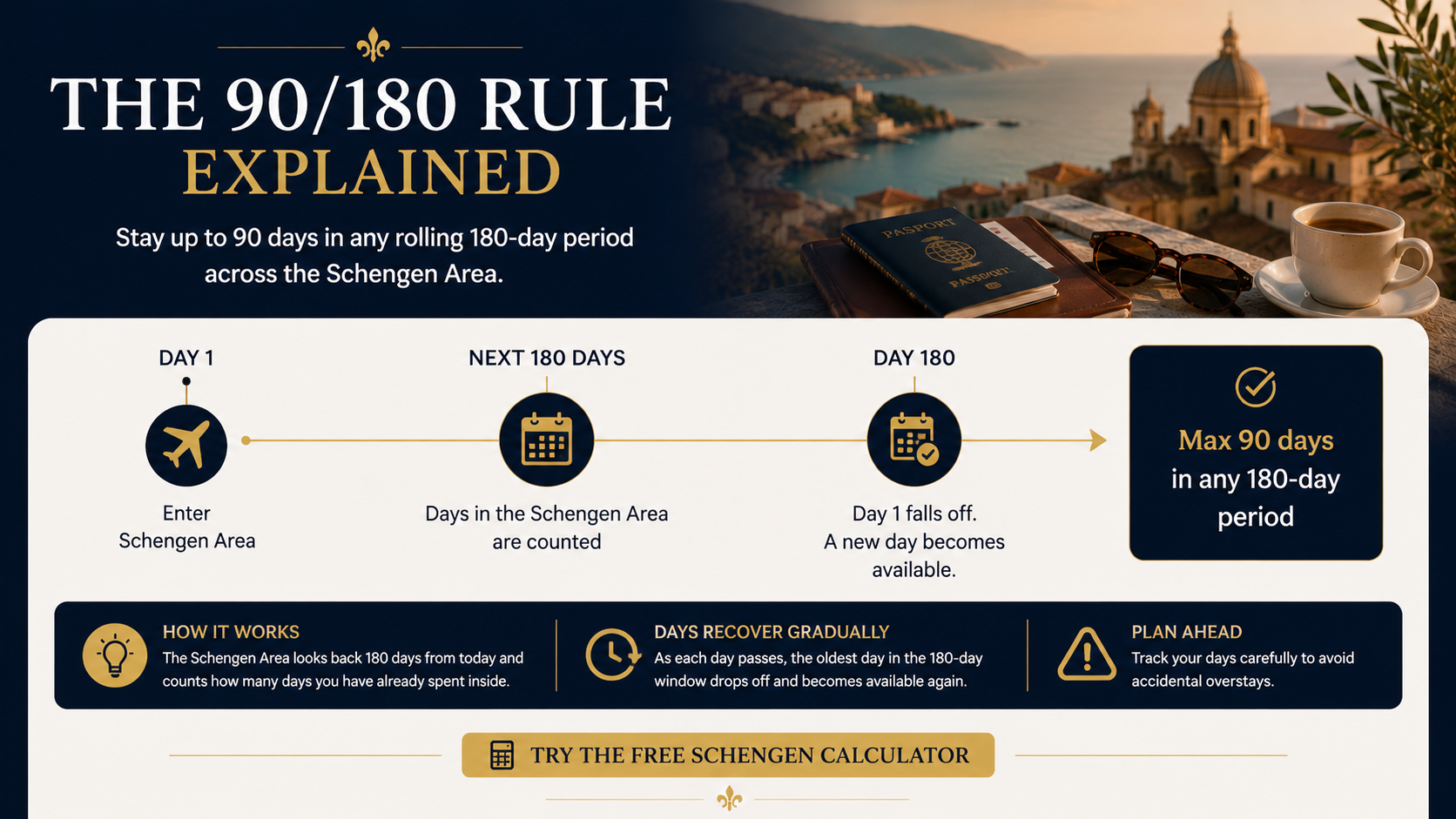
You are allowed 90 days within any rolling 180-day period across the entire Schengen Area—not just Italy.
That means your time in France, Spain, Portugal, Germany and the other Schengen countries all counts toward the same 90-day allowance.
Understanding this rule is essential if you want to enjoy Italy without accidentally overstaying.
Free Schengen Calculator
The easiest way to avoid mistakes is to track your travel days.
Our free Schengen Calculator helps you:
Calculate how many days you have left.
Plan future trips.
Avoid accidental overstays.
Understand the rolling 180-day rule visually.
Banking
Do you actually need an Italian bank account?
Not always.
Many people comfortably manage their finances using international debit cards, Wise, Revolut, or other multi-currency services.
Depending on your situation, opening an Italian account may or may not make sense.
Coming soon
Renting vs Buying
One of the biggest mistakes people make is buying property too soon.
Renting first offers enormous advantages.
It allows you to:
Experience different regions.
Discover what daily life is really like.
Keep flexibility.
Avoid expensive buying mistakes.
Decide where you truly want to settle.
Many experienced expats recommend renting for at least a year before buying.
Coming soon
Not ready to relocate permanently?
Learn how to keep your home base, use your Schengen time intelligently and build a genuine part-time life in Italy.


The Rolling 180-Day Rule
Many people think they can simply spend 90 days in Italy, go home for a few weeks, and return for another 90 days.
Unfortunately, that's not how it works.
The Schengen system looks backwards 180 days from every single day you're in Europe and counts how many days you've already spent inside the Schengen Area.
As older travel days fall outside that rolling window, they become available again.
It sounds complicated at first—but once you understand it, planning becomes much easier.
➡ Coming soon
EES and ETIAS (2026)
European border systems are changing.
The new Entry/Exit System (EES) will digitally record your entries and exits from the Schengen Area, replacing passport stamps.
The European Travel Information and Authorisation System (ETIAS) will require visa-exempt travellers to obtain travel authorisation before arriving in Europe.
Neither changes the 90-day rule—but both change how your travel is monitored.

Driving in Italy
Most visitors can legally drive in Italy using their home country's licence for limited periods, although some nationalities should also carry an International Driving Permit.
If you're spending months each year in Italy, understanding the driving rules, insurance requirements and vehicle ownership regulations becomes increasingly important.
Coming soon
Taxes
One of the biggest advantages of living in Italy part-time is that, when structured correctly, you may avoid becoming an Italian tax resident.
Italian tax residency depends on several factors—not just the number of days you spend in the country.
Understanding these rules before planning your lifestyle can save significant stress later.
Coming soon
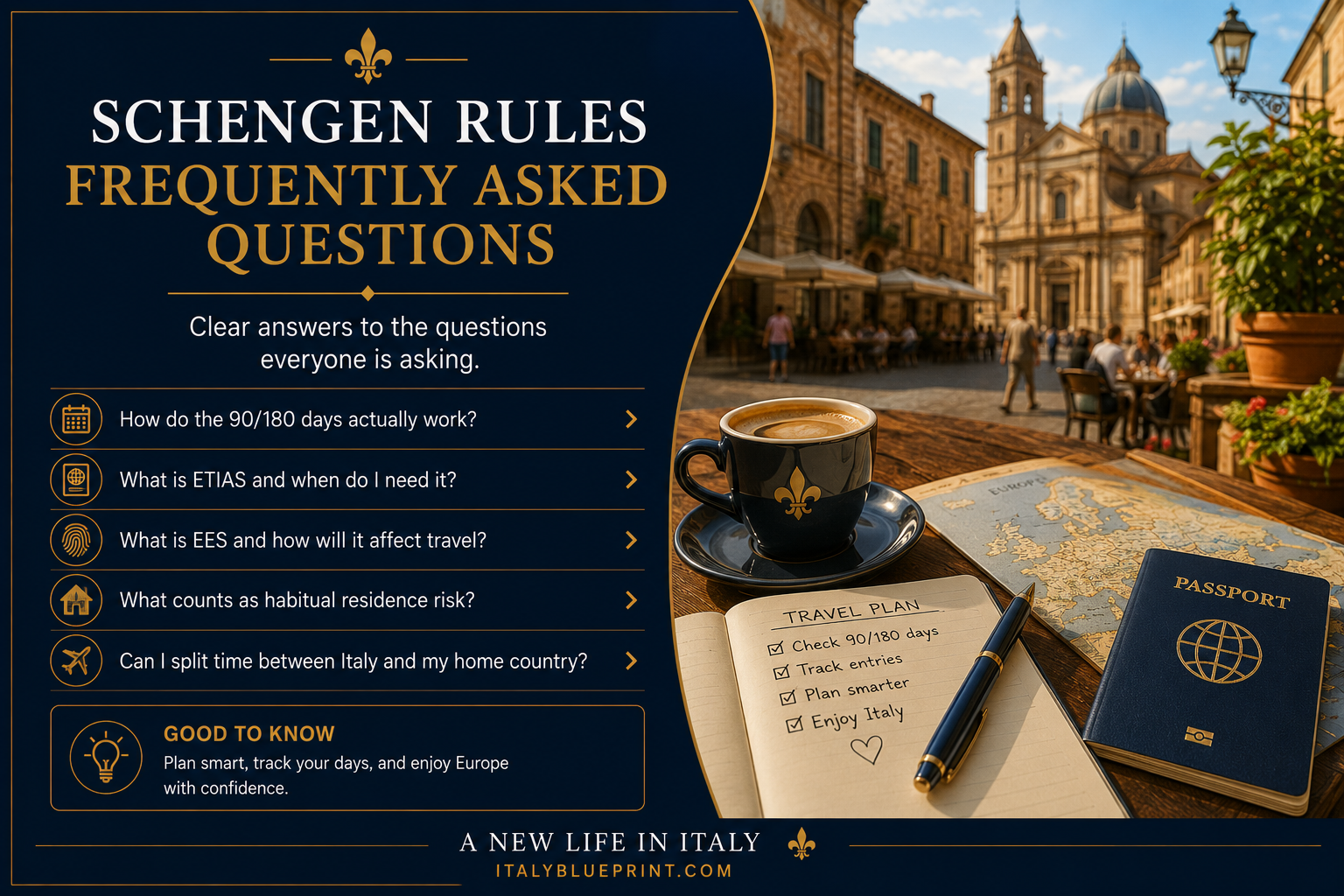
Frequently Asked Questions
Can I spend six months each year in Italy?
Yes—but not six consecutive months under the standard Schengen rules. Careful planning is required.
Do I need a visa?
Many nationalities don't require a visa for short stays of up to 90 days within the Schengen rules.
Can I rent long-term without residency?
In many situations, yes.
Can I buy property without becoming a resident?
Yes.
Will I become an Italian tax resident automatically?
Not necessarily. Tax residency depends on several legal factors, not simply owning a home or visiting Italy.
Can I open a bank account?
Sometimes, although many people find international banking solutions more practical.
Helpful Resources
Planning your own Italian lifestyle?
These free resources can help:
Final Thoughts
Living in Italy doesn't have to be an all-or-nothing decision.
For many people, the smartest approach isn't selling everything and making a permanent move on day one. It's taking the time to build an Italian life gradually—one season, one town, one experience at a time.
You might discover that part-time living is exactly what you've always wanted.
Or you may eventually decide that Italy truly is home.
Either way, you'll be making that decision from experience—not from a dream.