Your New Beginning Starts Here
Moving to Italy is a real, doable plan — not a fantasy. This is where you start building it.
Whether you're just starting to dream about it or already comparing regions, everything you need is below: your legal path, your tax situation, the right region for your life, and how to buy (or rent) the right way.
This site is built for people who are seriously considering moving or retiring to Italy and want honest, practical guidance — not romanticized fantasy.
Step 1: Understand Your Legal Path
Before you fall in love with a village, region, or that perfect house — get clear on your visa path. Most people start here, and the route you choose shapes almost everything else: where you can live, how long you can stay, and what comes next.
The Elective Residency Visa (ERV) is the most common path for retirees and remote earners. There's no employment requirement, but there is a minimum passive income threshold and specific paperwork.
Have significant capital to invest instead? See the Golden Visa

Step 3: Choose the Right Region for Your Actual Life
Italy isn't one place.
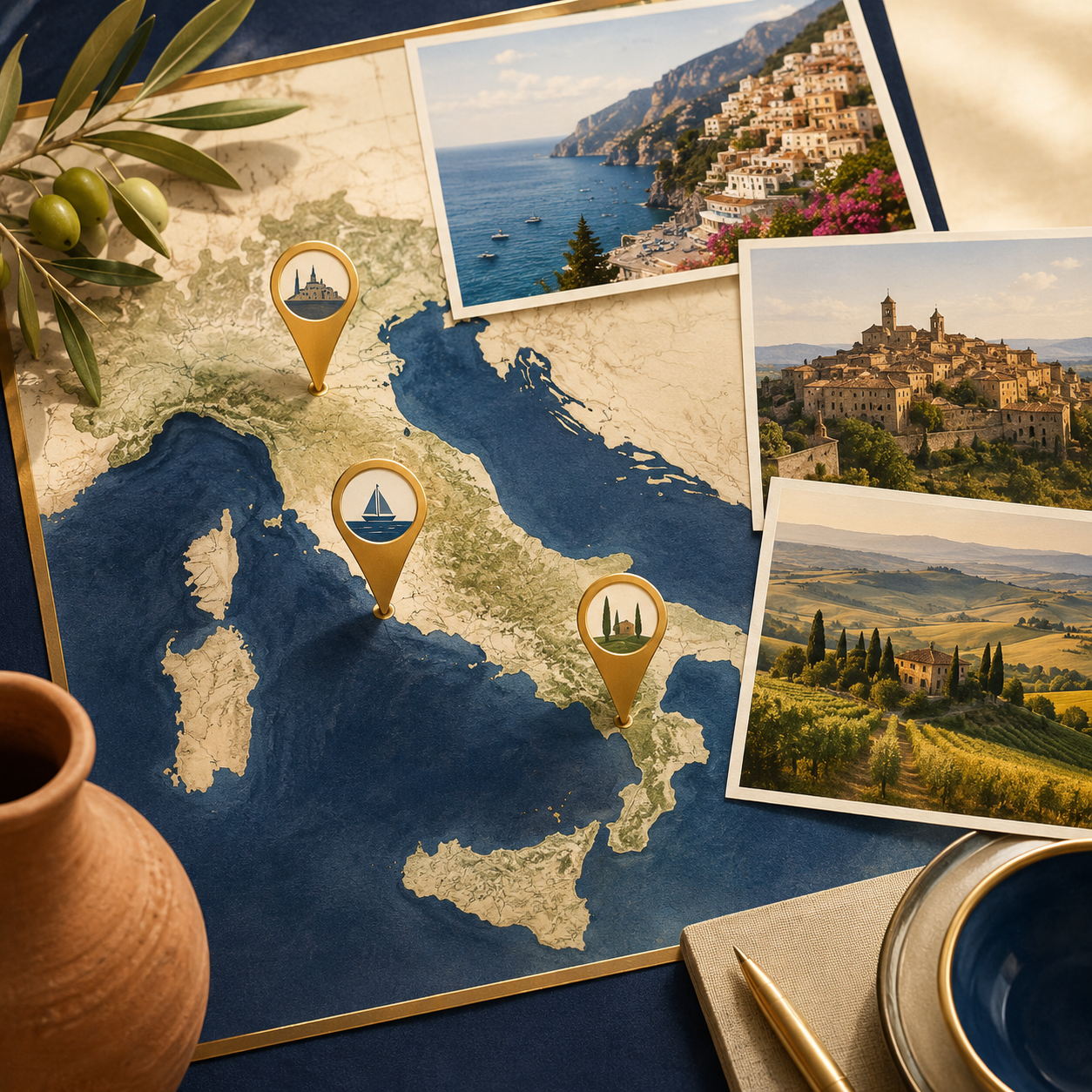
Life in Piedmont is nothing like life in Puglia. The region you pick should match how you actually want to live — not just how a postcard looks.
Ask yourself: Can I afford this region long-term? Is it close enough to an airport? Are there other expats or a community nearby?
Will I need a car?
Recommended next step:
Try our location quiz.
4 minutes, 24 questions, and you get the actual towns that suit your answers.

Step 5: Build Your 12–36 Month Timeline
A successful move rarely happens overnight. The key is to start early — and start with the right step, not just any step.
Next step: Want help mapping your specific timeline? [Book a Clarity Call →]

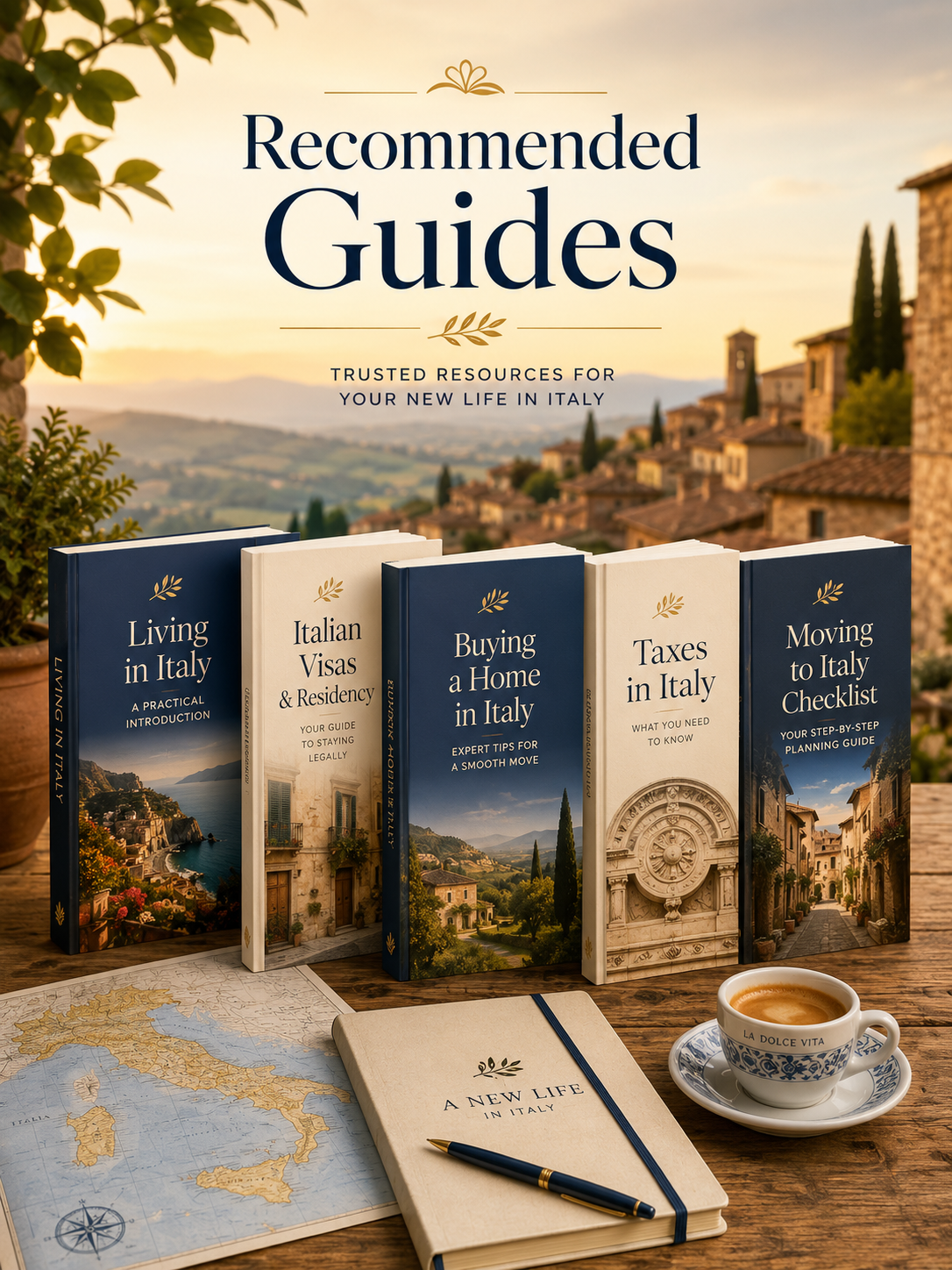
Recommended Guides
If you want to go deeper, these guides are built to help you understand the main parts of the move in plain English.
The Italy Retirement Blueprint
A practical guide for Americans thinking seriously about retiring in Italy.
Covers cost of living, regions, taxes, healthcare, property, and the bigger planning decisions that matter before you move.
The Italy ERV Guide
A step-by-step guide to the Elective Residency Visa for Americans who want to live in Italy without working there.
Covers requirements, documents, income, accommodation, consulates, and what happens after arrival.
The Complete Italy Tax Guide
A plain-English guide to how Italy may tax Americans living there.
Covers residency, pensions, Social Security, the 7% regime, foreign assets, US filing obligations, and planning mistakes to avoid.
Button: View the Tax Guide
The Free Italy Survival Glossary
A fun and practical glossary of Italian words, phrases, and terms you will actually need when dealing with daily life, bureaucracy, healthcare, property, taxes, and getting around.
Button: View the Glossary

The Dream Is Real. But the Plan Matters.
Italy can be a real life, not just a vacation memory. But the people who actually make it happen are the ones who plan — not the ones who wait for everything to feel certain.
You don't need to have it all figured out. You just need the next right step.
Italy Relocation Clarity Call
One hour focused entirely on your situation — visas, taxes, budget, timeline, where to live, and your next steps.
Not Ready to Move Permanently?
You may not need to sell your home, apply for residency or make an all-or-nothing commitment. Discover how to spend meaningful periods in Italy while keeping your life and home base elsewhere.
Live in Italy Part-Time

Step 2: Estimate Your Tax Situation
Taxes are one of the biggest unknowns in any move to Italy — and one of the most misunderstood. Get it wrong and it can cost you far more than expected.
Italy may also tax foreign income, depending on your residency status and existing tax treaties.
Recommended next step: Try the free tax calculator
Want a deeper, personalized breakdown?
Get the Italy Tax Guide.
Step 4: Rent Before Buying
Buying property is exciting — and it's also where people make their costliest mistakes. Rent first, in the region you're considering, before you commit to buying. It lets you test the area in real life, understand actual costs, and avoid locking into the wrong location.
Recommended next step:
Watch the video below

Join the Italy Relocation Planning Community
You don't have to figure this out alone. The community is where people at every stage — from early research to already living in Italy — ask questions, share what they're learning, and get direct access to me.