Italy Arrival Blueprint: What Actually Happens in Your First 8 Days

You've got the visa. The apartment is arranged. The flight is booked.
And now the question that quietly follows you through security and onto the plane: okay, but what actually happens once I land?
This is the part almost nobody explains clearly. Not because it's complicated — it's actually a fairly linear process — but because most guides stop at
"you got the visa!" and leave you to figure out the rest. So here's the real sequence: what happens, in what order, and what to have ready before you touch down.
This blueprint is written for people arriving on the Elective Residency Visa (ERV) — the most common path for American retirees and financially independent movers.
If you're arriving on a different visa type, the broad strokes are similar, but confirm specifics with your consulate.
Before You Land: What Should Already Be Done

A few things are much easier to sort out before you leave than after:
Codice Fiscale — your Italian tax ID number. You can request this through your Italian consulate before departure, and you'll need it for almost everything below.
If you didn't get it before leaving, it can also be obtained at any Agenzia delle Entrate office once you're in Italy — but it's one less thing to deal with jet-lagged if you handle it in advance.Health insurance — mandatory from the moment you arrive, and it needs to stay active through the entire gap until your Permesso di Soggiorno is issued and you're enrolled in the
national health service (or have confirmed private coverage that satisfies renewal requirements). Don't arrive without it.Proof of accommodation — your registered rental contract or property deed. You'll need this document repeatedly in the coming weeks.
Step 1: Within 8 Working Days — The Kit Giallo
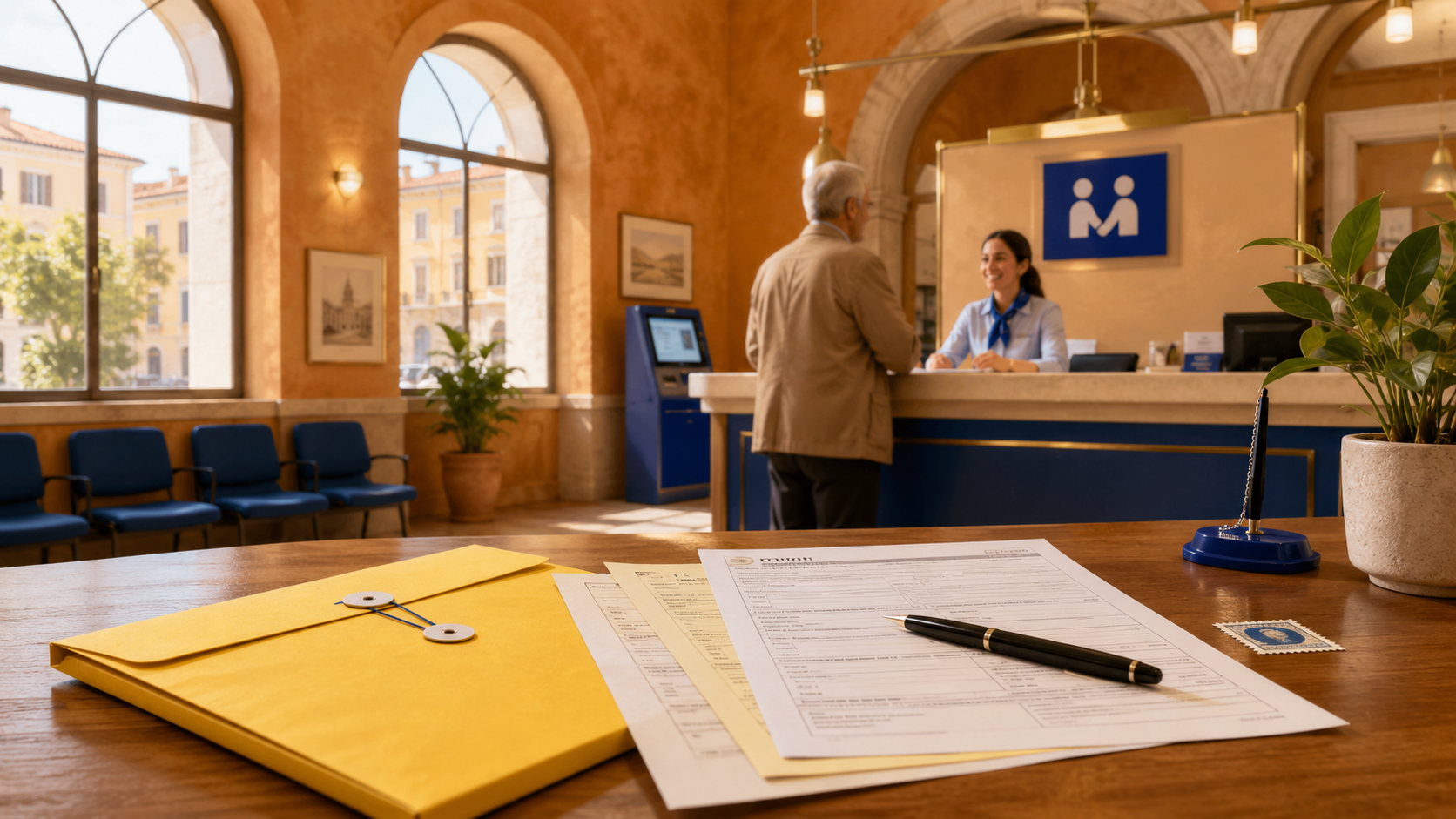
This is the deadline that matters most, and it's non-negotiable.
Within 8 working days of entering Italy, you need to go to a post office with a "Sportello Amico" counter and ask for the Kit Giallo — the "yellow kit." This is your application for the
Permesso di Soggiorno (residence permit).
What to expect:
You'll fill out the forms in the kit — Modulo 1, and Modulo 2 if you have family members joining you
Use a black pen, capital letters
You'll need a €16 marca da bollo (revenue stamp), available at any tobacconist
Submit the kit open — the post office needs to verify your documents are all there: passport, visa, proof of income, health insurance, proof of accommodation
Once submitted, you'll receive a receipt. Keep this safe. It's your proof of legal status while your permit is processing, and you'll use the code on it to track your application status
online through the Polizia di Stato portal.
After this, you'll be given an appointment date at the Questura (local police headquarters) — this is Step 3 below.
Step 2: Register Your Residency at the Comune
Somewhere in this same window, you'll also want to register your residency (residenza) at your local Comune (town hall). This is different from the Permesso di Soggiorno process, and it's what unlocks:
Registration with the national health service
A certificato di residenza — useful for everything from utility contracts to a future Italian ID card
The address of record that ties everything else together
Timing and process can vary a bit by comune, so it's worth asking the Kit Giallo post office staff or your Questura appointment letter for local guidance on when to do this relative to your permit application.
Step 3: The Questura Appointment
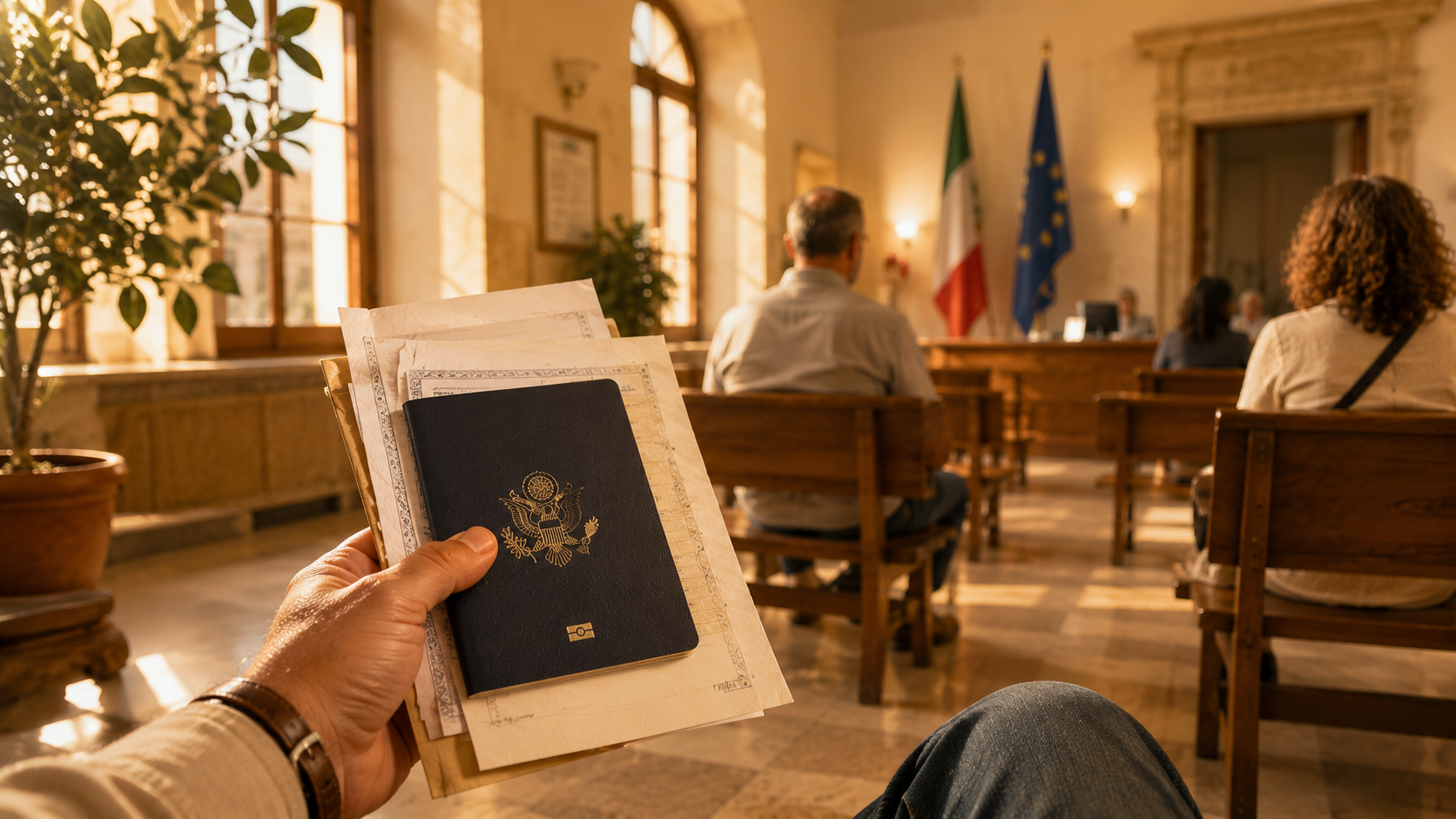
At your scheduled appointment, you'll go in person to the Questura for:
Fingerprinting
Photo and identity verification
A final check of your original documents
Bring everything — originals and photocopies of your passport, visa, kit receipt, proof of income, health insurance, and proof of accommodation. This is not the appointment to be missing paperwork at.
Get the full and complete guide to moving and retiring in Italy.
The Italy Retirement Blueprint has all the information you will ever need up to date for the current version of 2026.

Step 4: Health Insurance — Confirming Your Path
Once your residency is registered, you have a choice to make about ongoing health coverage:
Voluntary enrollment in the SSN (Servizio Sanitario Nazionale) — Italy's national health service, for an annual fee, handled at your local ASL office
Private international health insurance — many people keep this initially, especially while sorting out SSN enrollment logistics
Either way — there should be no gap in coverage between your travel/private insurance and whichever path you choose long-term. This is one of the most common places people accidentally create a
compliance problem for themselves, simply by assuming coverage that isn't actually continuous.
Step 5: Collecting Your Permesso di Soggiorno
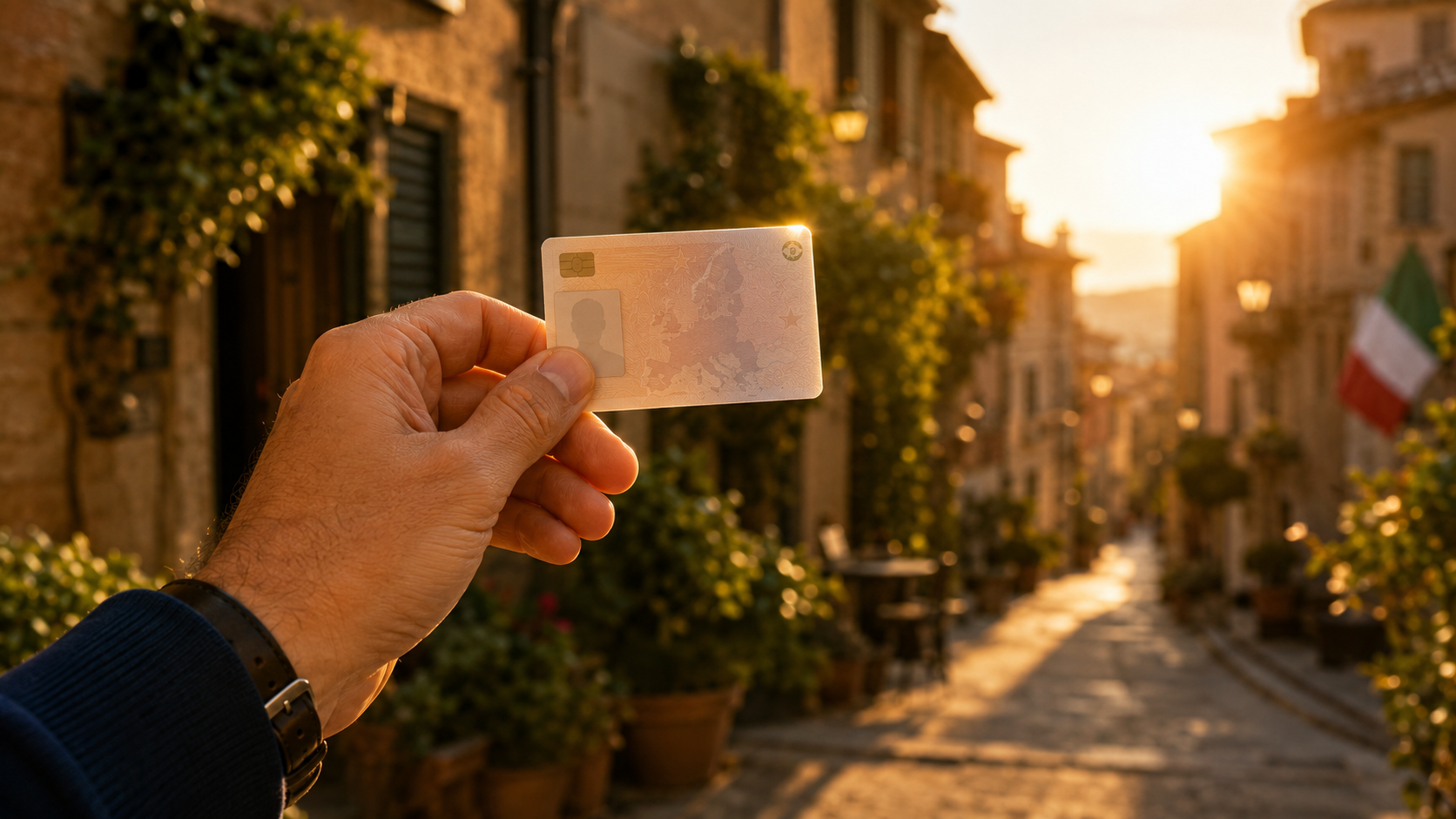
Processing time varies — commonly 2 to 8 weeks after your Questura appointment, sometimes longer depending on the province. You'll get an SMS notification when it's ready, and you'll return to the
Questura to collect the physical card.
The initial permit is typically valid for one year, renewable annually as long as you continue to meet the income and residency requirements — with renewal starting 60-90 days before expiration.
The Honest Part: What Trips People Up
Missing the 8-day window. This is the single most common and most avoidable mistake. Mark it on your calendar the moment you land — not the moment you feel settled.
A gap in health insurance coverage. Between "my travel policy ended" and "I finished SSN enrollment," some people accidentally leave themselves uninsured for a stretch. Don't let this happen
— confirm continuous coverage before you need it.Assuming the process is identical everywhere. Comune-level administration in Italy varies more than most guides admit. What's true in Lecce may not be true in Lucca.
When in doubt, ask locally — the post office staff and Questura are used to walking newcomers through it.
What To Do Now
If you're still in the planning stages and haven't left yet — this is exactly the kind of process worth mapping out before you go, not after you land.
The Italy Elective Residency Visa Guide walks through this entire arrival sequence in more detail, plus the visa application itself — document checklist, consulate-by-consulate guidance, and what to do
within your first 8 days, all in one place. $19, instant download.
And if you want a free starting point first — the Italy Relocation Roadmap is free and gives you the broader picture before you dive into the details.
Questions about your specific situation? Bring them to the Italy Relocation Planning Club — there's a good chance someone there has already been through exactly this.
