A Comfortable Monthly Budget in Italy in 2026: What Life Really Costs

One of the most common questions people ask when planning a move to Italy is surprisingly difficult to answer:
"How much money do I actually need each month?"
The internet is full of articles and videos claiming that you can live in Italy on €1,200, €1,500, or even less.
And technically, that's true.
But there is a huge difference between surviving and living comfortably.
If you're planning to retire, relocate, or spend part of the year in Italy, the question isn't "What's the minimum?" The real question is:
"What does a comfortable life in Italy actually cost?"
In this guide, we'll look at realistic monthly budgets for singles and couples, regional differences across Italy, housing costs, healthcare, transportation, and the hidden expenses many future expats overlook.
Let's start with something important.
What Does "Comfortable" Mean?

When people discuss budgets online, they often use the word "comfortable" without defining it.
For some people, comfortable means a simple village apartment, a quiet lifestyle, and occasional dinners out.
For others, it means frequent travel, a larger home, and regular entertainment.
For this article, comfortable means:
A clean, decent home
Reliable heating and cooling
Healthy food and groceries
Occasional dining out
Access to healthcare
A modest social life
The ability to handle normal unexpected expenses
Living without constant financial stress
This is not luxury.
But it is also not scraping by.
It's the lifestyle most people imagine when they think about building a new life in Italy.
The Biggest Cost: Housing
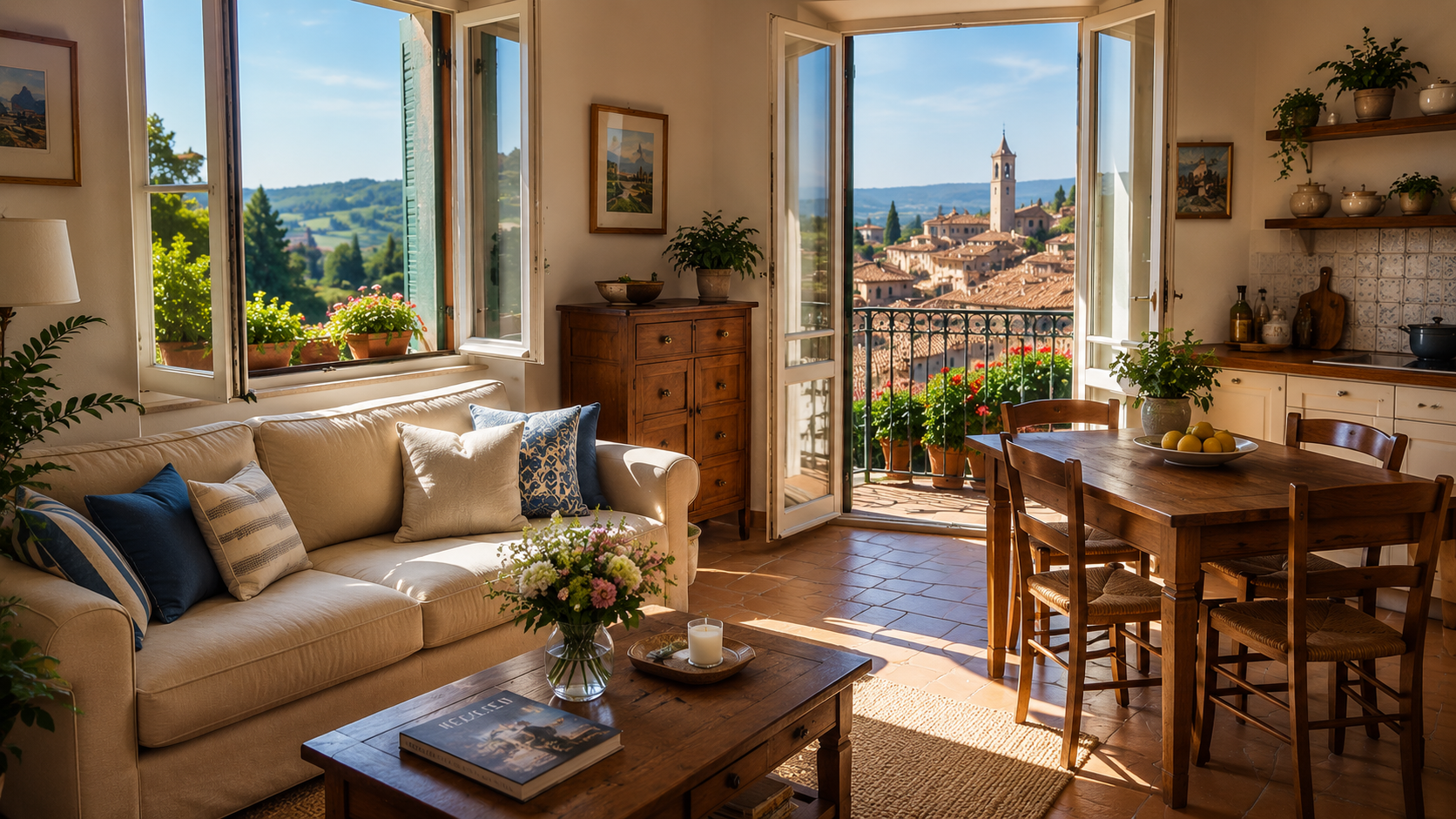
Housing is by far the largest variable in any Italian budget.
Many people make the mistake of assuming that because they found a €40,000 house online, life in Italy must be incredibly cheap.
Unfortunately, real life is a little more complicated.
Italy offers enormous differences in housing costs depending on location.
The best regions to retire in Italy.
Small Towns and Villages
In many parts of Southern Italy, Abruzzo, Le Marche, Molise, and inland areas of Sicily, you can still find reasonable rental prices.
Typical monthly rent:
€500–€700
At this level, you're usually looking at:
One or two-bedroom apartments
Small houses
Traditional town centers
Non-tourist areas
Mid-Sized Towns
In popular provincial capitals and larger towns, prices typically rise.
Typical monthly rent:
€700–€900
Many future expats find this range offers an excellent balance between affordability and convenience.
Popular Coastal and Tourist Areas
Coastal regions, Lake Como, Tuscany, and highly desirable tourist locations can become significantly more expensive.
Typical monthly rent:
€900–€1,500+
The lifestyle may be attractive, but your budget needs to reflect the reality.
Utilities: The Costs People Forget
Many people focus entirely on rent and forget about everything else.
Utilities matter.
A realistic monthly estimate for a couple might include:
Electricity and gas: €120–€200
Water: €15–€30
Waste collection fees: €15–€25
Internet: €25–€35
Mobile phones: €10–€20 per person
Total:
Approximately €170–€300 per month
The biggest surprise for many newcomers is heating.
Northern Italy can experience cold winters, and older homes are often less energy efficient than people expect.
Food Costs in Italy

Food is one of Italy's genuine advantages.
Fresh produce, local markets, and seasonal ingredients often allow people to eat well without spending a fortune.
A realistic monthly grocery budget:
Single Person
€250–€350
Couple
€450–€650
Of course, spending habits matter.
Someone who cooks regularly will spend significantly less than someone who relies on restaurants and takeaway meals.
Dining Out
Many future expats dream of dining out constantly.
The good news is that eating out in Italy can still be reasonably affordable.
A typical meal at a local trattoria might cost:
Lunch: €15–€25 per person
Dinner: €20–€40 per person
For most people, budgeting an additional €100–€200 monthly for dining out provides a comfortable balance.
Healthcare: One of Italy's Strengths

Healthcare is one of the reasons many retirees consider Italy.
Depending on your residency status and circumstances, you may have access to Italy's public healthcare system.
Many expats also choose to use private healthcare services for faster appointments.
Typical private consultation costs:
€50–€120
Optional private insurance:
€50–€150 per month
Many residents successfully combine public and private healthcare, giving them access to excellent care without excessive costs.
Transportation Costs
Transportation depends heavily on where you choose to live.
Major Cities
If you live in Rome, Milan, Turin, or Bologna, public transportation may reduce or eliminate the need for a car.
Monthly transport passes generally range from:
€30–€50
Smaller Towns and Rural Areas
Outside larger cities, owning a car often becomes necessary.
Typical monthly transportation costs:
Fuel: €80–€150
Insurance: €40–€80
Maintenance and registration: €30–€60
Total:
€150–€250 per month
Many future expats underestimate transportation costs when comparing locations.
North vs Central vs Southern Italy
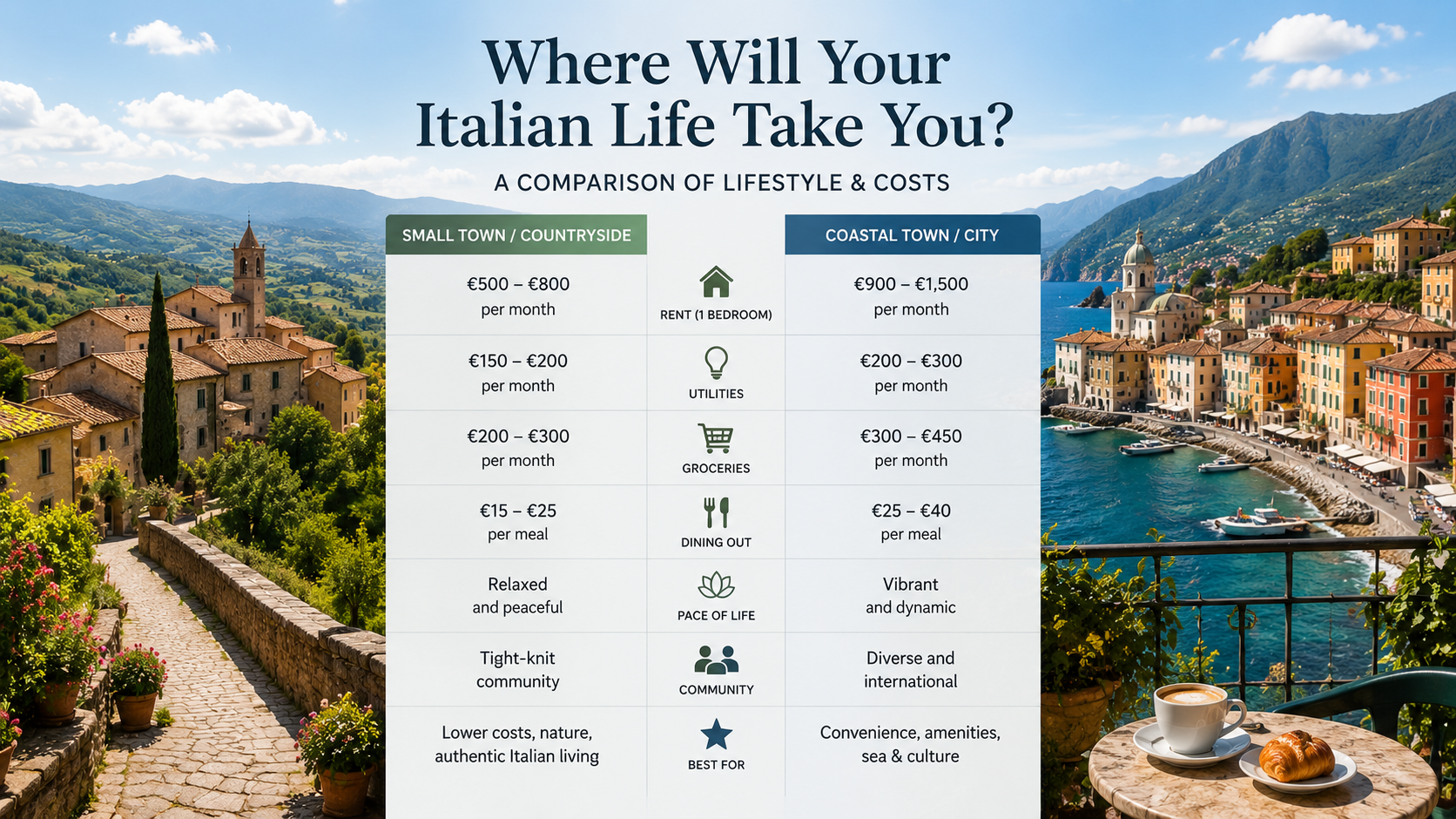
One of the biggest mistakes people make is assuming there is a single cost of living for all of Italy.
There isn't.
Northern Italy
Higher salaries.
Higher housing costs.
Higher overall expenses.
Comfortable budget:
Single: €2,200–€2,800
Couple: €3,000–€4,000
Central Italy
A balanced middle ground.
Comfortable budget:
Single: €2,000–€2,500
Couple: €2,800–€3,500
Southern Italy
Often the most affordable option.
Comfortable budget:
Single: €1,700–€2,200
Couple: €2,500–€3,000
These are broad estimates, but they demonstrate why location matters so much.
Realistic Monthly Budgets
Let's put everything together.
Budget Scenario #1: Comfortable Single Person
Rent: €700
Utilities: €180
Groceries: €300
Healthcare: €75
Transportation: €150
Dining and entertainment: €150
Miscellaneous: €150
Total: €1,705
Adding a buffer for unexpected expenses:
Recommended budget: €1,900–€2,300
Budget Scenario #2: Comfortable Couple
Rent: €850
Utilities: €220
Groceries: €550
Healthcare: €100
Transportation: €200
Dining and entertainment: €250
Miscellaneous: €250
Total: €2,420
Adding flexibility and savings:
Recommended budget: €2,600–€3,200
How Most Expats Actually Afford Italy
This is something that rarely gets discussed honestly.
Many people relocating to Italy are not relying entirely on local Italian salaries.
Instead, they combine:
Pensions
Social Security
Investment income
Savings
Remote work
Online businesses
This is not unusual.
In fact, it is one of the most common ways people successfully build a long-term life in Italy.
The goal is not necessarily to earn Italian wages.
The goal is to create a sustainable lifestyle that allows you to enjoy everything Italy offers.
The Reality
Italy can absolutely be affordable.
But affordability depends on expectations.
If you're chasing luxury, costs can rise quickly.
If you're expecting to live comfortably on a very limited budget, reality may be disappointing.
The sweet spot for many future expats lies somewhere in the middle.
A realistic budget, realistic expectations, and careful planning can make Italy an extraordinary place to live.
Not because it's cheap.
But because the quality of life can be exceptional for the money you spend.
Final Thoughts

When planning a move to Italy, don't focus solely on the minimum budget.
Focus on the budget that allows you to live the life you actually want.
A comfortable life in Italy is achievable for many people, but it starts with understanding the real numbers rather than the fantasy ones.
The more honest you are with your budget today, the smoother your transition to Italy will be tomorrow.
Planning your move to Italy? Download the free Italy Relocation Roadmap and join thousands of future expats receiving practical advice, guides, and updates from ItalyBlueprint.com.
