Best Places to Retire in Italy on €2,000 a Month
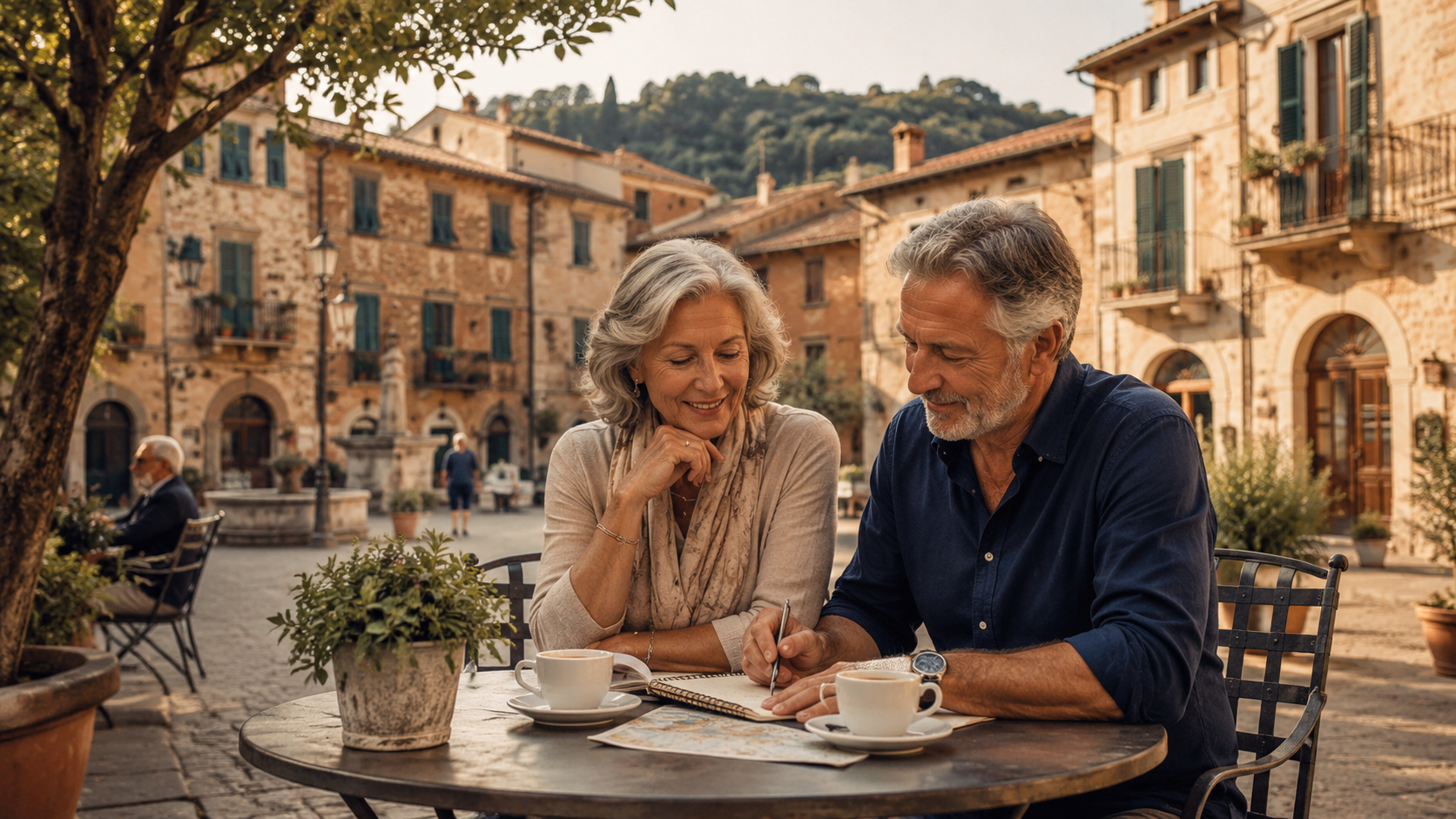
A lot of people start planning a move to Italy with one question:
Can I retire in Italy on €2,000 a month?
Free Italy relocation roadmap
The honest answer is: yes, it can work.
But not everywhere.
And not in every kind of lifestyle.
€2,000 a month in Italy can give you a peaceful, comfortable life if you choose carefully. But it is not a magic number. It does not mean lakefront villas, daily restaurant meals, and endless travel. It means you need to understand the trade-offs.
The biggest mistake is asking, “What is the cheapest place in Italy?”
A better question is:
Where can €2,000 a month still buy a good life?
Because cheap alone is not enough.
You need services. Healthcare access. Transport. Shops. Year-round life. A town that still feels real in February, not just beautiful in June.
So in this article, I want to look at the kind of places where €2,000 a month can realistically work — and the places where you need to be careful.
What €2,000 a month needs to cover

Before looking at towns, it helps to understand what that budget actually has to do.
Taxes can change this number quickly, so it is worth checking the broader picture before choosing a town.
For most retirees or long-term movers, €2,000 a month needs to cover:
Rent or housing costs
Utilities
Groceries
Healthcare costs or insurance
Transport
Phone and internet
Eating out
Home maintenance
Small emergencies
Some enjoyment
If you already own a home outright, €2,000 becomes much easier.
If you are renting, the rent will decide everything.
That is why town choice matters so much.
In a famous city, €2,000 can disappear quickly. In a smaller, practical town, the same money can feel much more comfortable.
The kind of town that works best

The best places for a €2,000 monthly budget are usually not the most famous places in Italy.
They are not Venice, Florence, Milan, central Rome, or the most glamorous parts of Tuscany.
The towns that work best usually have a few things in common.
They are large enough to have real services.
They are not completely dependent on summer tourism.
They have local life all year.
They have a train station or decent road connections.
They have supermarkets, pharmacies, doctors, cafés, and shops.
They are close enough to a larger city or hospital when needed.
And most importantly, they are places where people actually live — not just places people visit.
That is the sweet spot.
Not too remote.
Not too expensive.
Not too touristy.
Not too dead in winter.
1. Sulmona, Abruzzo

Abruzzo’s official tourism site
Sulmona is one of the most interesting towns in Abruzzo for people looking for beauty, affordability, and real life.
It sits in a valley surrounded by mountains, with a historic center, cafés, shops, local traditions, and access to nature.
It is not a tiny village where you feel isolated. It is a real town.
That matters.
For someone on €2,000 a month, Sulmona can make sense because Abruzzo is generally more affordable than many parts of northern or central Italy, while still offering an excellent quality of life.
You get mountain scenery, a strong sense of place, good food, and a slower rhythm.
But this is not the place for someone who wants the sea on their doorstep or a large English-speaking expat bubble.
Sulmona is better for someone who wants a more Italian daily life.
2. Ascoli Piceno, Le Marche

Ascoli Piceno is one of those towns that feels much more elegant than its price level suggests.
It has one of the most beautiful piazzas in Italy, a historic center, local life, cafés, markets, and access to both mountains and the Adriatic coast.
For retirement planning, it offers something very important: it feels like a real city, but not an overwhelming one.
That can be a good balance.
You are not stuck in a tiny village, but you are not paying big-city prices either.
On €2,000 a month, Ascoli Piceno may be realistic if you rent carefully and avoid the most expensive options. It is especially interesting for people who want culture, beauty, and a walkable historic center.
The trade-off is that Le Marche is still less internationally known than Tuscany or Umbria, so it may feel more local and less expat-friendly in some areas.
For some people, that is exactly the attraction.
Official Comune di Ascoli Piceno website
3. Cuneo, Piemonte

Cuneo is a very different option.
This is not the classic “cheap southern Italian town” story.
Cuneo is in Piemonte, in northern Italy, close to the mountains and not far from the French border. It is organized, practical, clean, and very livable.
For someone who wants northern Italy but cannot afford the most expensive cities, Cuneo is worth researching.
It has services, shops, healthcare access, public transport, and a real year-round population.
The lifestyle is more Alpine, more structured, and less “sunny postcard Italy.”
For €2,000 a month, Cuneo may be tighter than some towns in Abruzzo or Molise, especially if renting. But for the right person, it can offer a very strong quality of life.
This is a good example of why “best place” depends on the person.
Some people want warmth and sea.
Others want mountains, order, and services.
4. Campobasso, Molise
Campobasso local information

Molise is often ignored, which is exactly why it can be interesting.
Campobasso is the regional capital of Molise, and that gives it an advantage over smaller villages: it has services.
For someone trying to live on €2,000 a month, that matters more than people think.
Very small villages can be cheap, but they can also make daily life complicated. Campobasso gives you a more practical base while still being in one of Italy’s more affordable regions.
It is not glamorous. It is not a famous dream destination.
But that is part of the point.
A good retirement town does not have to impress people on Instagram. It has to support your real life.
Campobasso could suit someone who wants affordability, cooler weather, local life, and access to basic services without paying coastal or tourist-town prices.
5. Rieti, Lazio
Rieti is a useful option because it sits in Lazio, but it is not Rome.
That alone changes the budget.
It gives you access to central Italy, hills, nature, and a smaller-town lifestyle while still being connected to a broader region.
For someone who likes the idea of being within reach of Rome but does not want Rome prices or Rome stress, Rieti is worth looking at.
It has a historic center, a local feel, and a quieter rhythm.
On €2,000 a month, Rieti may be more realistic than the more famous towns of Tuscany or Umbria, especially if you choose housing carefully.
The question is whether the town’s pace, transport options, and services match your needs.
As always, do not judge it only from photos.
Visit in the off-season.
Walk the streets on a normal weekday.
See how daily life feels.
6. Teramo, Abruzzo
Teramo is another Abruzzo option that deserves attention.
It is not as famous as some hill towns, but it has something very important: practicality.
It is a real town with services, shops, and access to both mountains and the Adriatic coast.
That combination can be very attractive.
For people on a €2,000 monthly budget, Teramo may offer a better balance than more tourist-focused coastal towns. You can still reach the sea, but you are not necessarily paying beachfront prices.
It also gives you a more normal, everyday Italian lifestyle.
That may not sound exciting at first.
But for retirement, normal is often exactly what you want.
A town where people live, shop, work, go to the doctor, meet for coffee, and continue their lives in winter.
That is what makes a place livable.
7. Spoleto, Umbria
Spoleto is beautiful, historic, and culturally rich.
It is also more known than some of the other places on this list, so you need to be more careful with the budget.
But it still deserves a place because for the right person, it offers a very strong lifestyle.
Umbria can be less expensive than the most famous parts of Tuscany, while still giving you hill towns, countryside, history, and a slower pace.
Spoleto has culture, architecture, train connections, and a real identity.
On €2,000 a month, you would need to be careful with rent and lifestyle expectations. This is not necessarily the cheapest option.
But it could work if you want beauty and culture without going to the most expensive Italian locations.
The key is not to fall in love with the postcard version.
You need to check the rental market, winter life, transport, and healthcare access.
8. Benevento, Campania
Benevento is an interesting alternative to the more famous parts of Campania.
When most people think of Campania, they think of Naples, the Amalfi Coast, islands, or coastal towns.
Those places can be expensive, crowded, or complicated.
Benevento is inland, historic, and much less obvious.
That can make it more affordable and more practical for someone looking for a real base.
It has history, services, and a local rhythm. It is not a beach fantasy, and that is exactly why it may work better for long-term life.
For €2,000 a month, inland Campania can offer better value than the famous coastal areas.
But you need to be honest about climate, transport, and whether the town gives you the lifestyle you actually want.
Not everyone wants inland southern Italy.
But for some people, it could be a smart choice.
9. Vasto, Abruzzo
Vasto is for people who want access to the sea but still need to think carefully about budget.
It sits on the Adriatic coast in Abruzzo and offers historic charm, sea views, beaches nearby, and a more relaxed pace than many famous coastal destinations.
The reason to be careful is that coastal towns can change a lot by season.
Some feel wonderful in summer and much quieter in winter.
That does not mean they are wrong.
It just means you need to understand what you are choosing.
If you want a quieter off-season lifestyle, Vasto may be attractive. If you need a town that feels busy every month of the year, you need to test it carefully.
For €2,000 a month, Vasto may be possible depending on rent, location, and lifestyle. But do not assume “Abruzzo” automatically means cheap if you are looking near the sea.
10. Orvieto, Umbria
Orvieto is one of the most beautiful towns in central Italy.
It is also not a secret.
So why include it?
Because it represents a category many retirees dream about: a historic hill town with culture, beauty, restaurants, views, and good connections.
But with Orvieto, €2,000 a month requires discipline.
You may be able to make it work, especially outside the most expensive housing options, but it is not the same as choosing a lesser-known town in Molise or Abruzzo.
The attraction is obvious.
The lifestyle can be excellent.
But the budget needs to be realistic.
Orvieto is a good reminder that “possible” and “comfortable” are not always the same thing.
If you choose a more desirable town, you may need to compromise on space, eating out, or travel.
Places to be careful with
How Much Does It Cost to Retire in Italy in 2026?
There are many places in Italy where €2,000 a month can disappear faster than expected.
Be careful with very famous cities, luxury lake areas, prime coastal towns, and places that are heavily dependent on tourism.
Also be careful with extremely cheap villages.
That may sound strange, but cheap can be expensive in other ways.
If a house costs very little but you need a car for everything, have limited healthcare access, struggle to find tradespeople, and feel isolated in winter, the true cost may be higher than expected.
The cheapest place is not always the smartest place.
For retirement, the best value often comes from practical towns that are affordable but still alive.
The February test
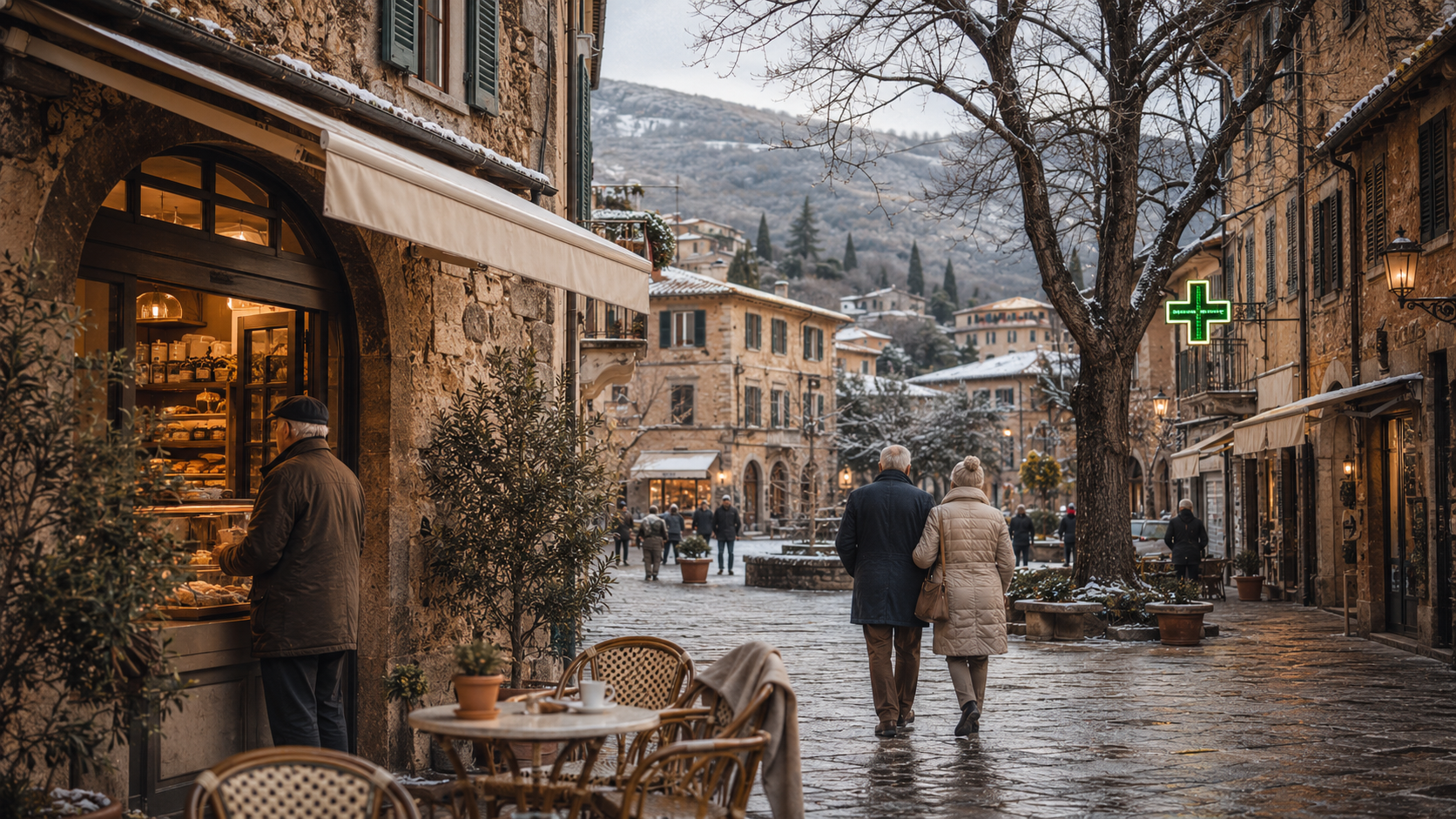
When you are researching places in Italy, use what I call the February test.
Ask yourself:
Would I enjoy living here in February?
Would I still like this town on a quiet Tuesday?
Are the cafés open?
Are people around?
Can I get groceries easily?
Can I reach a doctor?
Can I get to a train?
Would I feel connected or isolated?
This test is simple, but it cuts through fantasy very quickly.
A town that works in February is much more likely to work as a real home.
Italian Ministry of Health
So, can you retire in Italy on €2,000 a month?
Yes, in the right place.
But the right place is probably not the most famous place.
And it may not be the cheapest place either.
The best place is the one where your budget, lifestyle, healthcare needs, transport needs, and personality all fit together.
€2,000 a month can give you a good life in Italy if you are thoughtful.
It can give you a slower rhythm, fresh food, beautiful surroundings, community, and a sense of peace.
But it works best when you choose a town that supports real life, not just the dream.
If you are still planning your move, I put together a free Italy relocation roadmap to help you think through these decisions before making expensive commitments.
Start there.
Free Italy relocation roadmap
Because choosing the right town is not just about where Italy is beautiful.
It is about where your life in Italy can actually work.
