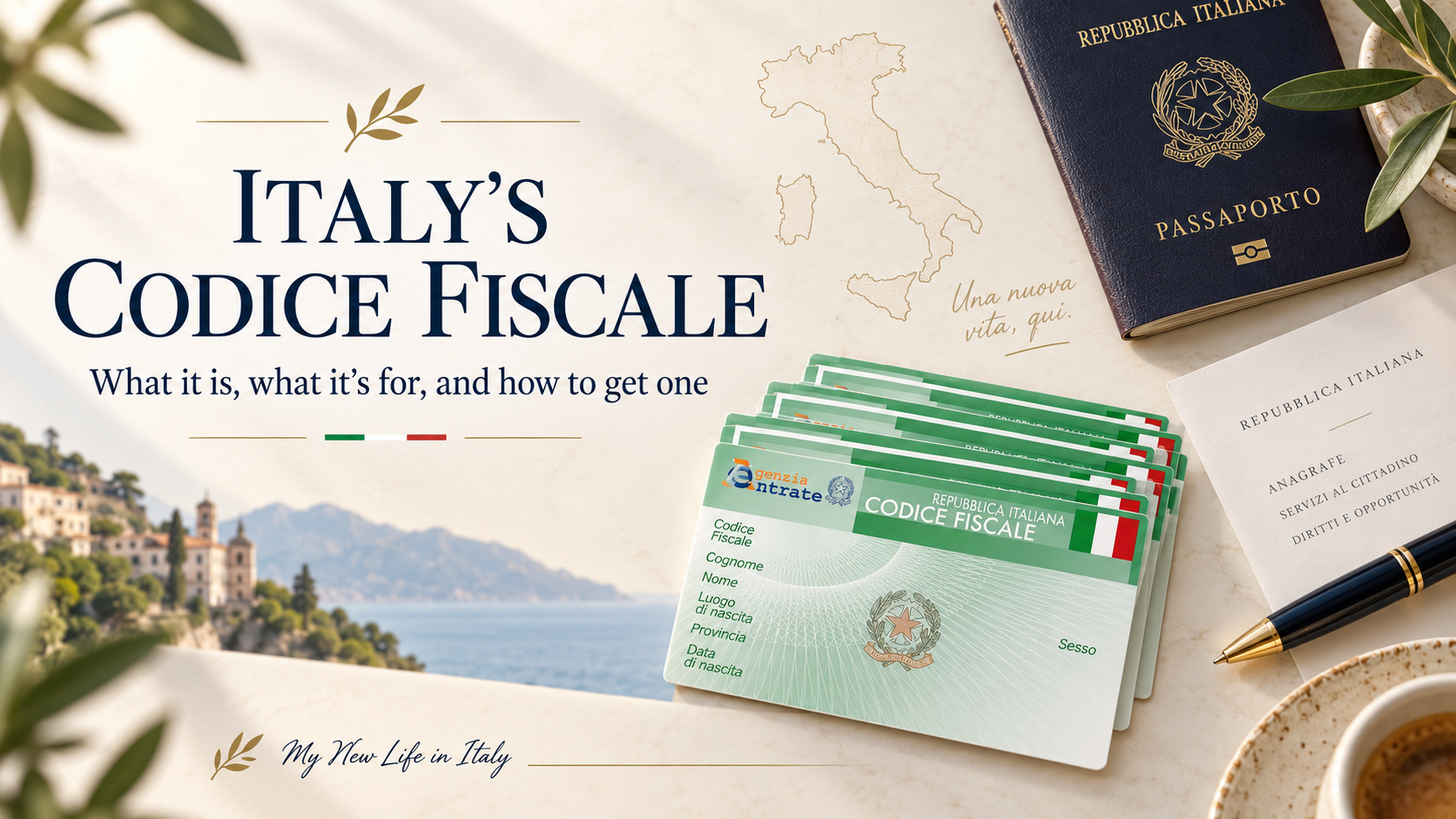
Almost every guide on this site eventually says some version of the same sentence: "you'll need a codice fiscale first." It comes up before you can open a bank account, sign a lease, apply for a mortgage, enroll in healthcare, get a SIM card, or in some cases even finish a visa application. It's the one document nearly everything else depends on — which makes it worth understanding on its own, not just as a footnote in someone else's checklist.
What Exactly Is a Codice Fiscale?
Think of it as Italy's version of a Social Security number — a unique, 16-character code issued by the Agenzia delle Entrate (Italy's tax authority) that identifies you in essentially every official interaction you'll have in the country.
It's not random. Your own name, birth date, and place of birth are encoded directly into it: the first six characters come from consonants in your surname and first name, the next five encode your birth year, month, day, and gender, and the following four identify your town or country of birth. A final check character closes it out. You don't need to memorize any of that to use one — but it's a nice bit of trivia that the code on your card is, in a real sense, a compressed version of your own identity.
What You Actually Need It For
The honest answer is: almost everything. A codice fiscale is required to:
Open an Italian bank account
Sign a residential lease or a preliminary property purchase agreement
Apply for a mortgage (it's literally the first document a bank asks for)
Register for healthcare or the national health service (SSN)
Get a mobile phone contract or set up utilities
Register a car, or even buy one
Complete most visa and residence-permit applications
If you're planning any kind of move to Italy — retirement, remote work, buying property — this is usually the very first practical step, well before the more exciting parts of the process.
The Three Real Ways to Get One
In Italy, at the Agenzia delle Entrate. If you're already in the country, this is the simplest route: bring a valid passport, fill out the request form, and in most cases you'll walk out with your codice fiscale the same day. The catch is obvious — it requires you to already be in Italy, which doesn't help if you need the code before you arrive.
At an Italian consulate abroad. This used to be the standard route for people applying from outside Italy, and it's still free. But it's worth being upfront about something that's changed: consular policy on this has tightened noticeably in the last couple of years, and access now varies a lot by consulate — some still process these requests routinely, others have scaled back or redirect applicants elsewhere. If you're going this route, confirm directly with your specific consulate what they currently accept, rather than assuming it works the way it did a few years ago.
Through a delegated representative in Italy. If you have someone in Italy you trust — a lawyer, a relative, a real estate agent — you can grant them power of attorney (a delega) to request the code on your behalf at a local Agenzia delle Entrate office. This sidesteps the consulate bottleneck entirely, though results can vary somewhat by office.
Through a paid online service. This is the option built specifically for the exact problem above: you need the code before you can do almost anything else, but the free routes either require you to already be in Italy or depend on a consulate that may or may not be taking requests. A service like ILF's online codice fiscale application handles the paperwork and submission for you from wherever you are — currently around €80 for standard processing (roughly 20 days) or €80 plus a €40 expedite fee for a 7-day turnaround, with a free 30-minute consultation included on larger orders.
Get Your Italian Codice Fiscale Online
Skip the consulate line — ILF handles your fiscal code application entirely online, from €80.
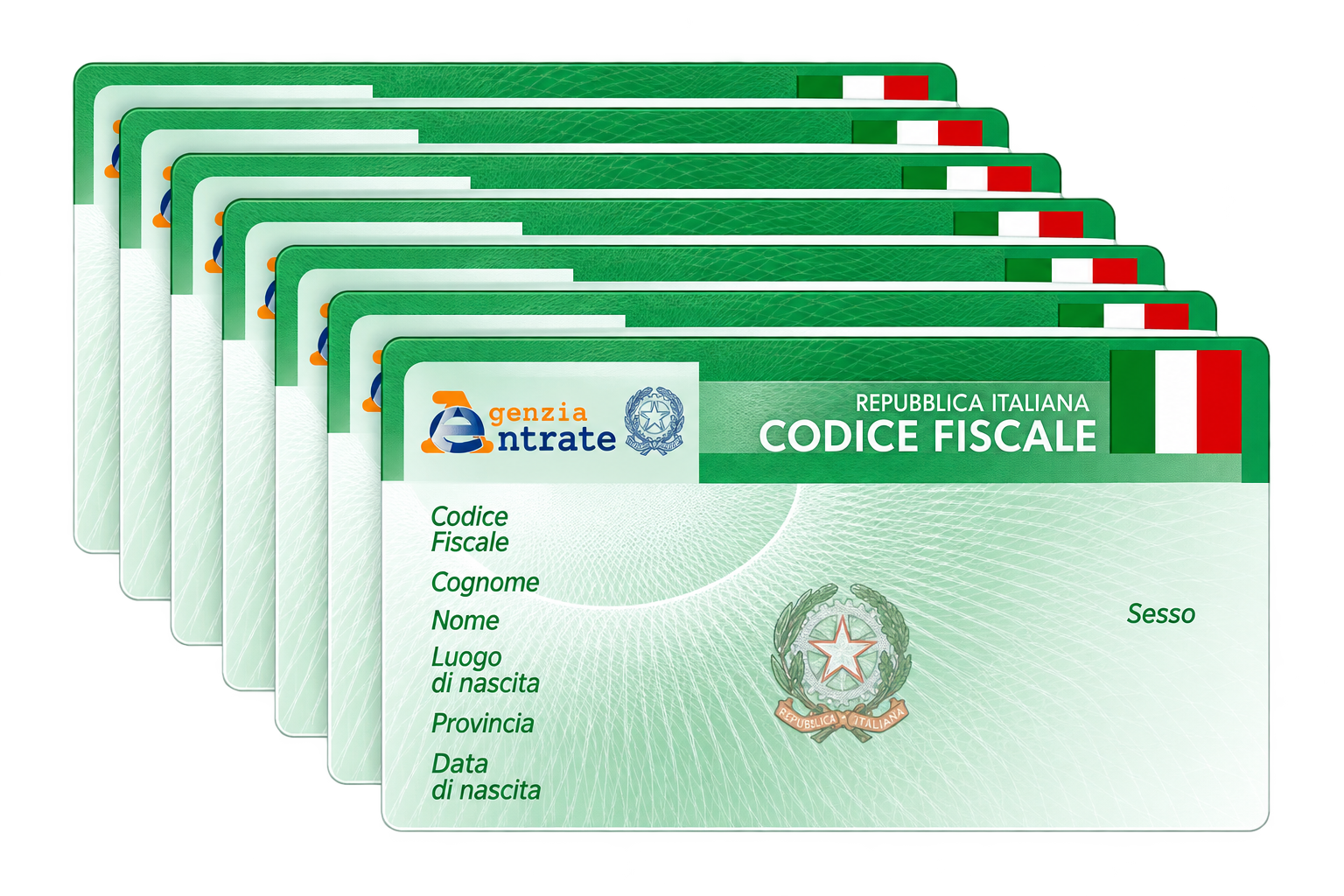
It's not the only way to get a codice fiscale, and it's not free — but if the free routes aren't working for your situation or your timeline, it removes the one bottleneck that everything else in your move is waiting on.
What You'll Need to Apply
Regardless of which route you use, the core requirements are the same:
A valid passport (or EU national ID card, if applicable)
A completed application form (the AA4/8 form for individuals)
Basic personal details: full name, date and place of birth, and current address
Any visa or entry documentation relevant to your situation, if applying in connection with a specific visa
Frequently Asked Questions:
-
Yes, through the official channels — in person in Italy or at a consulate that's currently accepting requests. Paid services exist because they solve a timing and access problem, not because the code itself has an official cost.
-
Yes, and you should.
Either through an Italian consulate (where access currently varies by location) or through an online service that handles the application on your behalf. What you can't do is apply for it as an Italian resident before you've actually started that process — it's tied to your identity, not your address. -
Yes. You can't complete a property purchase, open the bank account you'll need for it, or apply for a mortgage without one — it's the first practical step in the entire process.
-
In person in Italy, often the same day. By consulate or delegated representative, it varies. Through a paid online service, commonly around 20 days standard or about a week with an expedited option.
-
No. Once issued, it's yours permanently — it doesn't need to be renewed, even if you leave and later return to Italy.
Where to Go From Here
If you already know you're buying property, the Italy Mortgage for Foreigners page picks up exactly where this one leaves off.
If you're still deciding which visa path fits your situation, Italy Visa Types Compared is the place to start before you get into paperwork at all.
And if you're at the very beginning of figuring out whether this move makes sense for you, the Italy Retirement Blueprint is built for exactly that stage.
(Note: this page is informational, not legal advice — consulate policies and processing times change, and the Agenzia delle Entrate or your consulate is the final word on your specific situation.)